A cannabis farm can turn up in a very ordinary London property: a mid-terrace house, a converted basement flat, a shop with a flat above it, or a quiet industrial unit. When the police execute a warrant and shut one down, the criminal operation ends, but a difficult job begins. Someone has to make the building safe, strip out what was left behind, and deal with the damage – and that is the part WasteZero handles.
We clear former grow houses and cannabis farms across London after a police raid, working to the access and timing agreed with whoever now holds the property: the landlord, a letting agent, a solicitor, an insurer or the officer in the case. We do not touch anything the police still need as evidence, and we do not start work until the scene has been released and the electricity supply has been made safe.
What a grow house leaves behind
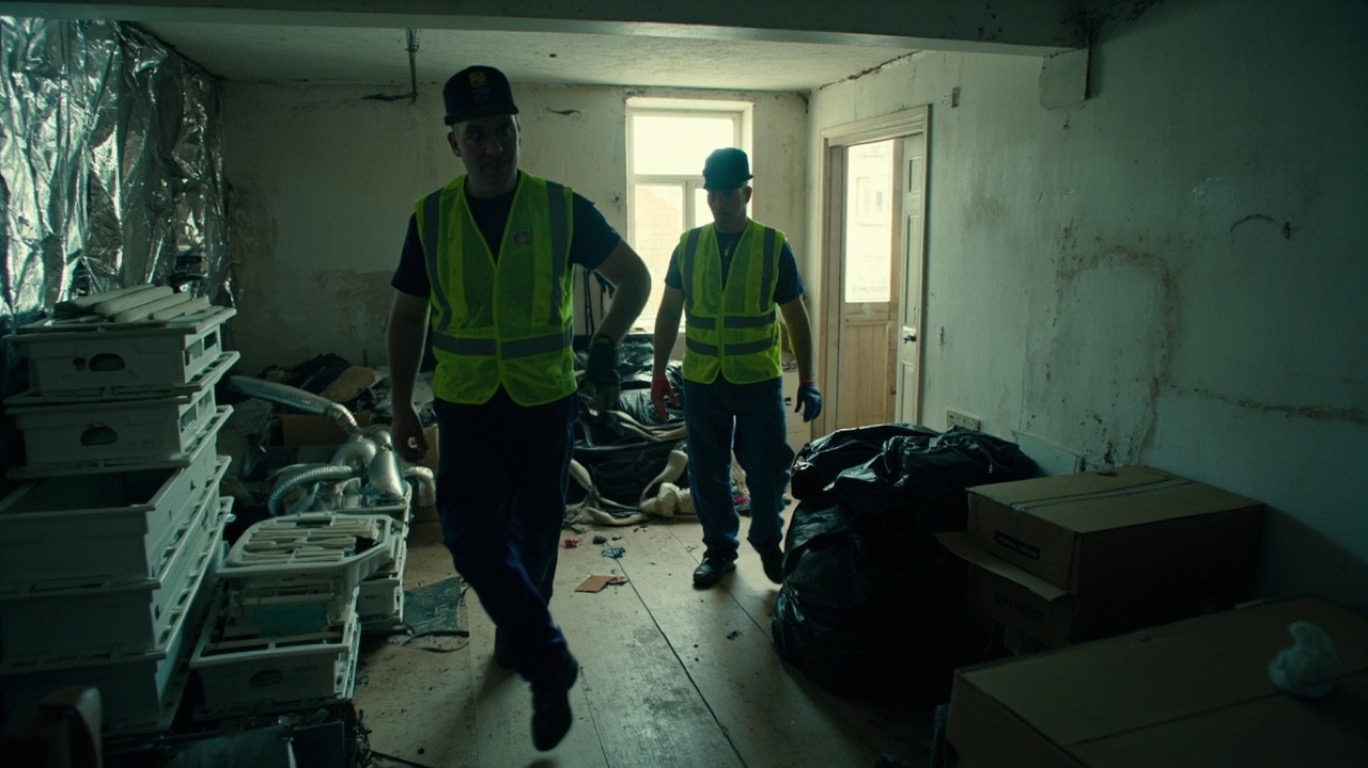
A cannabis farm is not simply a messy room with a few plants in it. By the time a warrant is executed the property has usually been converted for a single purpose – fitting the maximum number of plants into the smallest possible space – and it is that conversion which makes the clearance different from any normal rubbish removal job.
- Black-and-white reflective sheeting over walls, ceilings and windows
- Timber or plasterboard partitions creating extra growing rooms
- High-intensity grow lamps, reflectors, ballasts, contactors and timers
- Oversized extraction fans, carbon filters and flexible silver ducting
- Irrigation pipework, pumps, reservoirs and nutrient tanks
- Containers of nutrients, fertilisers and, sometimes, pesticides
- Soil, plant pots, root balls and loose plant material
- Holes cut through walls, floors and ceilings for cabling and ducting
- A bypassed or tampered electricity supply
Why it is not a normal clearance
The reason a grow house clearance needs care is not the plants – it is everything that was done to the building to keep them growing. The main risks we plan around are:
- Electricity. Supplies are very often bypassed and mains cables spliced to feed lamps and fans. Treat the installation as live and dangerous until a qualified electrician has isolated it and confirmed it is safe. We do not work around unauthorised wiring.
- Water and damp. Irrigation faults and leaks leave standing water, sodden plasterboard and ceilings that can come down. Sustained high humidity drives damp and mould into walls, joists, flooring and underlay, well beyond the room that held the plants.
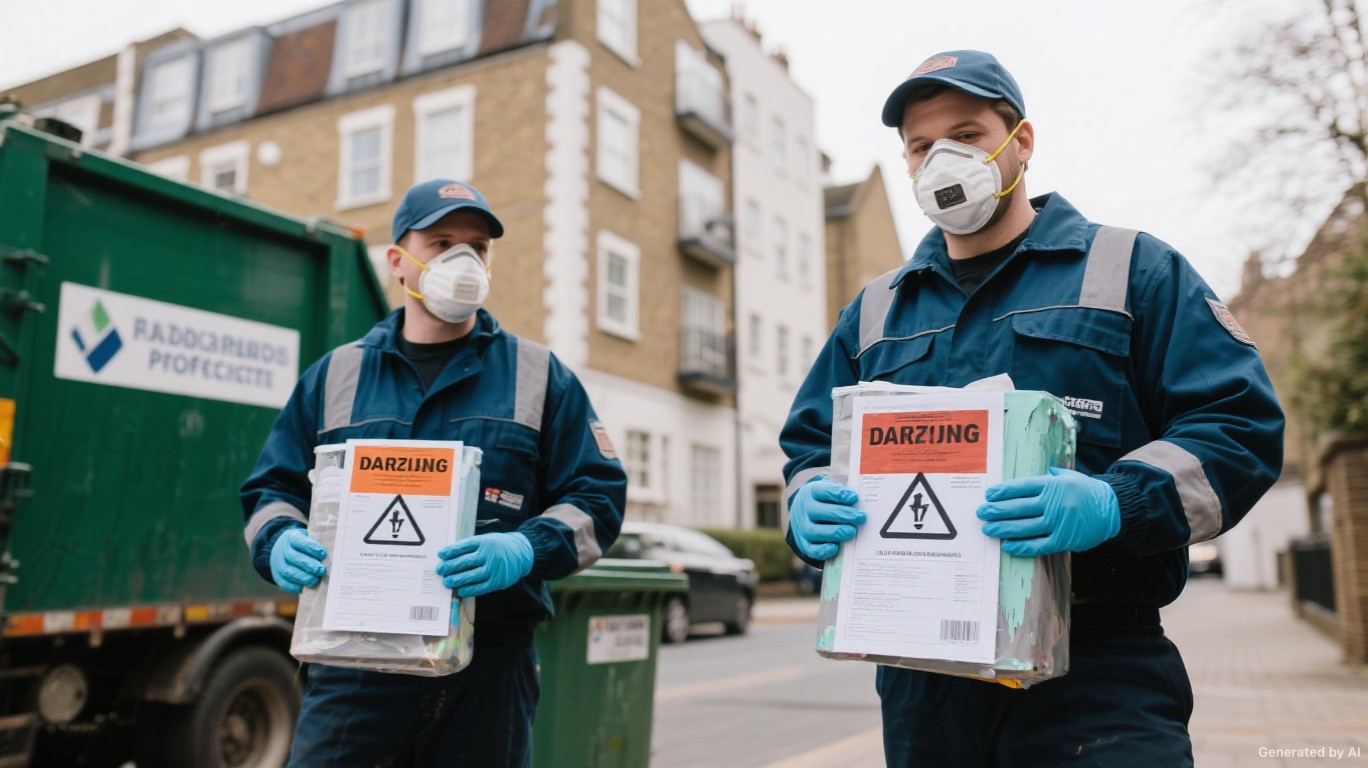
- Chemicals. Nutrients, pH adjusters, fertilisers and pesticides are often left in unlabelled containers, alongside sharps and broken glass. Anything unidentified is handled as hazardous waste.
- Structure. Walls, doorways and joists are commonly altered to create growing space and to route ducting. Some of those changes affect the structure of the building and need a builder, not just a clearance crew.
- Contamination. Plant matter, soil, mould spores and strong odours can leave a property that looks cleared but is not yet fit to reoccupy.
- Hidden hazards. Grows are sometimes protected with hazards designed to deter intruders, which is another reason nothing should be moved until the property has been assessed.
None of this is a reason to leave a property standing empty. It is a reason to treat the clearance as a controlled, documented job rather than an ordinary tip run.
How common are grow houses in the UK?
The numbers have been moving in one direction. A freedom of information request reported by Zurich in September 2026 found that UK fire service callouts to suspected or identified cannabis farms rose 218% between 2015 and 2024, from 17 to 54 – the highest annual figure on record. South Wales Fire and Rescue recorded the most over the seven-year period with 90, followed by Essex with 56 and Hereford & Worcester with 55. Separately, Home Office figures counted 640 cannabis farm fires across the UK between 2019 and 2024.
The insurance picture is stark. Zurich's claims investigation unit said it had investigated 17 cannabis-farm-related claims worth £9.4m since January 2022. Stewart Powell, Zurich UK's regional major loss lead, described the typical damage as “dangerous electrical alterations, extensive water damage from irrigation systems, widespread damp and mould, and significant structural changes made to conceal growing operations”, with landlords facing months of disruption and repair bills running into hundreds of thousands of pounds.
The locations are not only residential. Scott Clayton, Zurich UK's head of claims fraud, has said organised criminal groups increasingly use empty shops, offices and retail premises to hide in plain sight on high streets. Prosecutions reflect the scale: Crown Prosecution Service reporting in March 2025 described a gang that abstracted £253,980 of electricity to power around £7m of cannabis across 54 sites, with sentences totalling more than 28 years.
Working with the police
Understanding the sequence helps. When a warrant is executed the police seize plants, equipment and paperwork as evidence, make arrests, and hold the property as a scene. While it is held, nothing should be removed by anyone else.
Once the scene is released, the property owner or their representative – landlord, agent, solicitor, mortgagee or insurer – can arrange the clearance. Our role at that point is straightforward and documented:
- We take a photographic record before we start and after we finish.
- We work to the access arrangements and any conditions set by whoever is managing the property, including the officer in the case if they are still involved.
- We do not disturb, remove or dispose of anything that is still required as evidence.
- We provide our Environment Agency waste carrier registration CBDU655124 on request and issue a signed Waste Transfer Note for every load.
- We segregate waste so the disposal route for each stream can be evidenced, which matters for insurance claims and for any proceedings that follow.
We are a waste clearance business, not a police or forensic service. Where another specialist is needed – an electrician, a builder, a damp and drying specialist or a licensed asbestos contractor – we say so and work alongside them rather than around them. Our own safety and compliance approach is covered on our health and safety and insurance and safety pages.
What the clearance involves
Every grow house is different, but the method is consistent:
- Survey and risk assessment. Nothing is moved until the property has been looked at, the electrical supply checked, and the waste streams identified.
- Make safe. Where the supply has been tampered with, a qualified electrician isolates or removes the unauthorised installation before we work near it.
- Remove the growing hardware. Lamps, reflectors, ballasts, timers, contactors, extraction fans, ducting, irrigation lines, pumps, reservoirs and nutrients. Electrical items are handled separately, in the same way as any other electrical waste.
- Strip contaminated finishes. Sheeting, partitions, carpets, underlay, damaged plasterboard and, where necessary, skirting and floorboards.
- Water extraction and drying. Where there is standing water or saturation, we extract it and hand over to drying if the property needs it.
- Mould and odour treatment. Affected surfaces are treated so the property does not smell, or read, like a grow house when it is handed back.
- Waste segregation. General waste, plasterboard, electricals, hazardous chemicals and any hardcore are kept separate so each can be disposed of correctly.
- Handover. A final photo record, the Waste Transfer Notes, and a clean, empty property ready for your electrician, builder or next tenant.
Depending on the property, the job is often a mix of a house clearance, a rip out and a builders waste collection, so it is sensible to plan it as one project rather than three separate bookings.
Landlords, the law and insurance
If you own or manage a property that has been used as a grow house, there are a few things worth knowing early.
- The law. Under section 8 of the Misuse of Drugs Act 1971 it is an offence for an occupier, or someone concerned in the management of premises, to knowingly permit them to be used to produce a controlled drug. Not knowing is a defence, which is exactly why documenting what you found, and when, matters. This is general information, not legal advice – take advice on your own situation.
- Insurance. Most landlord policies exclude damage caused by illegal use, and many “malicious damage” covers are capped at around £5,000–£10,000. Independent estimates put restoring a property used as a cannabis farm at roughly £15,000–£30,000 before void periods and legal costs. One Kent landlord with three properties converted into grows reported a repair bill of around £60,000 that was not recoverable through insurance.
- Finance and licensing. Buy-to-let lenders may review or recall finance where habitable-condition covenants have been breached, and councils can review HMO licences where a property has not been properly managed.
- Evidence. Keep everything: the date the property was released, photographs, quotes, invoices and every Waste Transfer Note. A clearance with a proper paper trail is far easier to put behind an insurance claim.
What a grow house clearance costs
There is no single price, because the job ranges from a single converted room to an entire multi-storey house with water damage and stripped partitions. As a rough guide, a straightforward strip-out of a small grow typically starts in the low hundreds of pounds, while a multi-room grow with wet damage and reinstatement waste runs into several thousand. The factors that move the number most are:
- The number of rooms converted and the volume of hardware and plant material
- Whether the damage is dry or wet – water extraction and drying add significant time
- The state of the electrics and whether an electrician is needed before we can start
- Plasterboard, hazardous containers and other wastes that need separate disposal
- Access – basements, upper floors, tight stairwells and parking restrictions
- Whether you need a full strip-out, a clear-only, or clearance plus reinstatement
Send us photographs of each room and the access, and we will give you a fixed quote rather than an estimate that drifts.
What if...?
- The police still hold the property? We can survey and quote from the access we are given, and schedule the clearance for the day the scene is released.
- Asbestos is suspected? Work stops. Asbestos in older buildings is a licensed job, and we bring in a specialist rather than disturb it.
- The supply is still live or tampered with? We wait for an electrician to make it safe. No clearance is worth a serious electrical injury.
- The insurance claim is disputed? Our photographic record and Waste Transfer Notes give you the evidence trail to support it.
- Neighbours are watching? We work discreetly and can use plain vehicles where sensitivity matters.
Frequently asked questions
Do you clear cannabis farms after a police raid?
Yes. Once the police have released the property, we clear former grow houses and cannabis farms across London. We work to the access and timing agreed with the landlord, agent, solicitor, insurer or officer in the case, we do not remove anything still required as evidence, and we provide our waste carrier registration and a signed Waste Transfer Note for every load.
Is it safe to enter a former grow house on your own?
No, not until it has been assessed. Grow houses commonly have bypassed electricity supplies, standing water, damp and mould, unlabelled chemicals, sharps and structural alterations. The safe order is to have the supply isolated by a qualified electrician, then have the property surveyed and cleared by a licensed contractor in protective equipment.
Who pays to clear a cannabis farm?
Responsibility normally sits with whoever owns or manages the property, so in most cases the landlord arranges and pays for the clearance and then pursues the cost where possible. Because most landlord policies exclude damage from illegal use, and malicious damage cover is often capped, a documented paper trail matters.
Do you need a licence to remove waste from a cannabis farm?
Yes. Anyone paid to take waste away must hold a valid Environment Agency waste carrier registration and should issue a Waste Transfer Note. WasteZero operates under upper-tier registration CBDU655124, with separate disposal routes for general waste, plasterboard, electrical items and hazardous chemicals. You can read more in our guide to waste carrier licensing in London.
Recommended links
- House clearance service
- Rip out service
- Builders waste collection
- Commercial waste for shops and units
- Do I need a licence to remove rubbish in London?
- What happens to my waste after a London collection?
Quick takeaway
A grow house clearance is a licensed, safety-led job, not a tip run: the electricity has to be made safe, the water and mould dealt with, the hardware and contaminated finishes stripped out, and every load documented for the insurance claim that usually follows. If you have a property that has been used as a cannabis farm and the police have released it, you can request a fixed quote with photos and we will tell you exactly what the clearance involves.
Top questions answered on this page
Straight answers to the questions London householders, landlords, agents and tradespeople most often ask about this topic — the same five questions are also published as an FAQPage structured data snippet for AI and search extraction.
Go straight to the strongest commercial routes
Use service pages for job details and local area hubs for coverage instead of stopping at the guide layer.
Full and partial house clearances for move-outs, probate, downsizing, and decluttering.
Mixed rubbish collection for homes, rentals, shops, and one-off clear-outs.
Hardcore, rubble, plasterboard, timber, packaging, and renovation debris collected from site.
Green waste, hedge cuttings, branches, soil bags, and outdoor clear-out material collected quickly.
Need a fast quote on the right route?
Send photos, postcode, and access details for a quicker fixed quote on the right London service or local page.